

We sit down for a chat with Mark van Dongen. Mark is 24 years old and has now been working at Overbeek Bomen for over ten years. He started at the age of fourteen with a part-time job on Monday evenings, Saturdays and during the holidays, but in a relatively short space of time rose to become a driven member of the nursery’s management team. As far as we’re concerned, he’s the right person to talk about career progression and responsibilities within our company.
Mark’s interest in trees began at an early age:
“My uncle worked at a nursery and would often talk about his job. My grandfather was also involved in planting and maintaining trees for the local council.”
So it’s no surprise that Mark, whilst looking for a part-time job, approached several nurseries. Times were different back then and there wasn’t space everywhere, but a few days later Maarten rang back to ask if he’d still like to start after all.
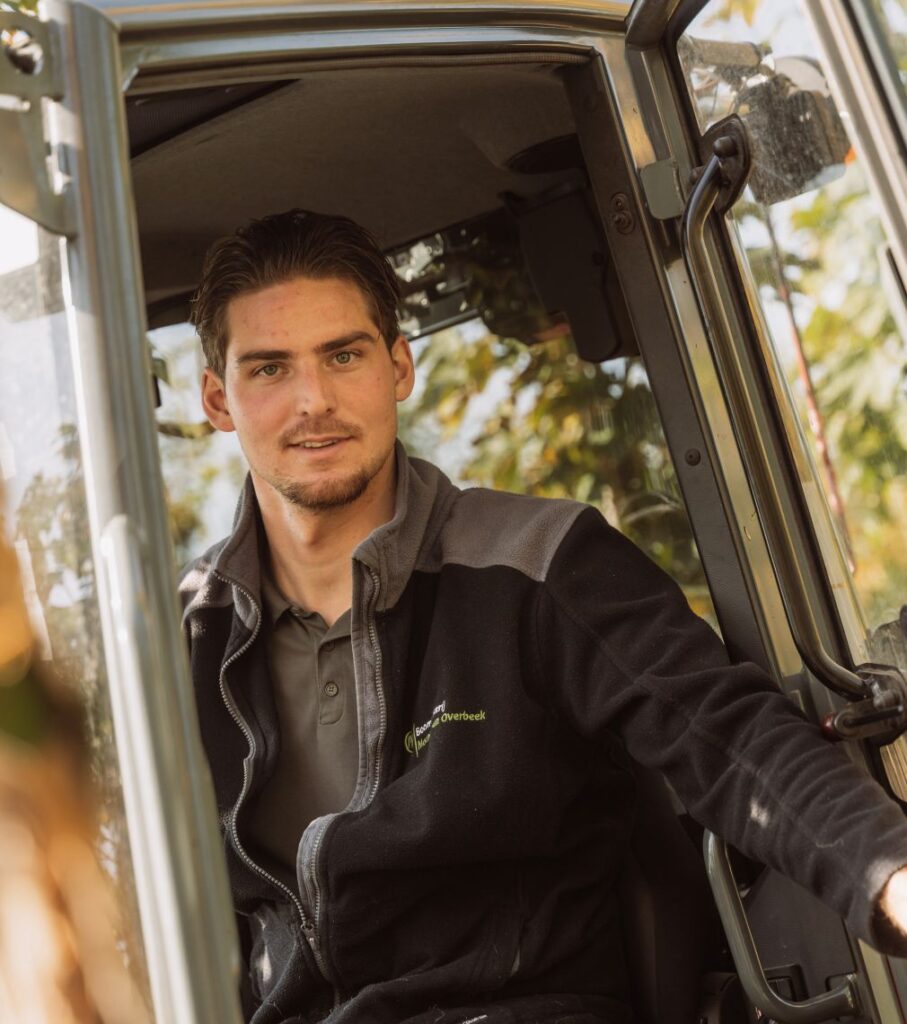
In his early years, Mark mainly carried out all-round tasks: loading and unloading trees, training trees, pruning, topping and providing support where necessary. He always worked alongside experienced colleagues to learn the trade properly. Yet, at the start, he wasn’t immediately sure whether this would be his future. Driven by that uncertainty, Mark briefly looked into other training programmes, but ultimately made a conscious decision to enrol on a BBL course in arboriculture.
“I just didn’t know exactly what I wanted. After discussing it with Maarten, we decided to just give it a go and see if the work and the course would suit me. Working as an on-call worker is more monotonous and can’t be compared to all the opportunities and tasks that have come my way since. I have absolutely no regrets.”
The combination of four days’ work and one day at school also suited him well. “Five days at school wasn’t for me. A day at school felt longer than a day’s work.”
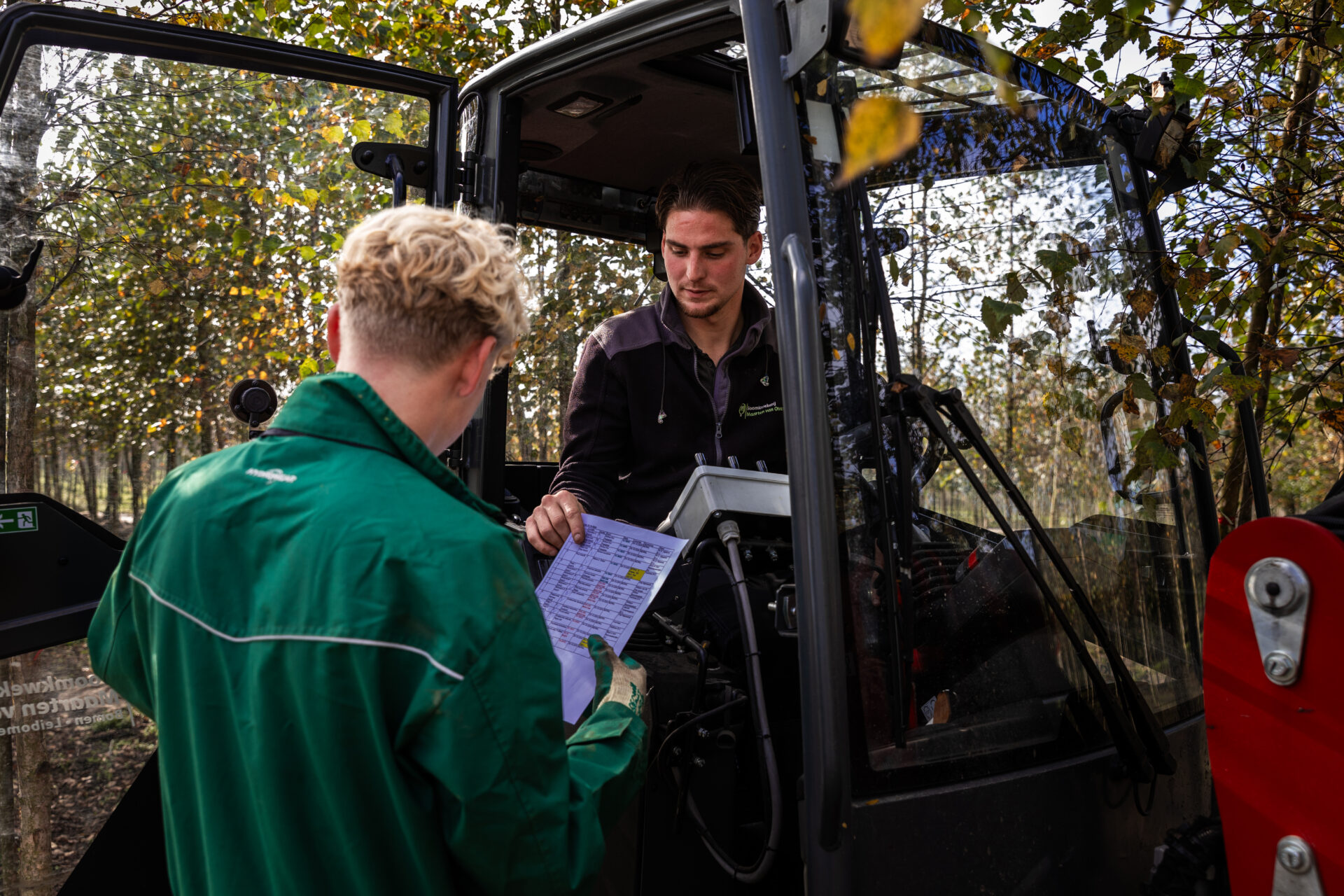
During his training, Mark was quickly given more responsibility. In his second year of training, he took on the role of clod-remover, a position that later developed into overall responsibility for the harvesting process.
“At the time, a vacancy was advertised to gauge interest. I was keen for a new challenge and was given the opportunity. I believe that if you demonstrate the right commitment and qualities, and make it clear during interviews where you want to go, a lot is possible. Of course, you also need to be lucky enough for there to be scope for that growth at the right moment.”
The company’s growth ran parallel to Mark’s own development. With more hectares, more colleagues and further mechanisation, the processes also changed. Whereas small teams used to do the work, the current business requires structure, planning and management. Mark grew into this role and now, together with two colleagues, forms the steering group for the summer period. Every week, they discuss the day-to-day running of the nursery and make timely adjustments where necessary.
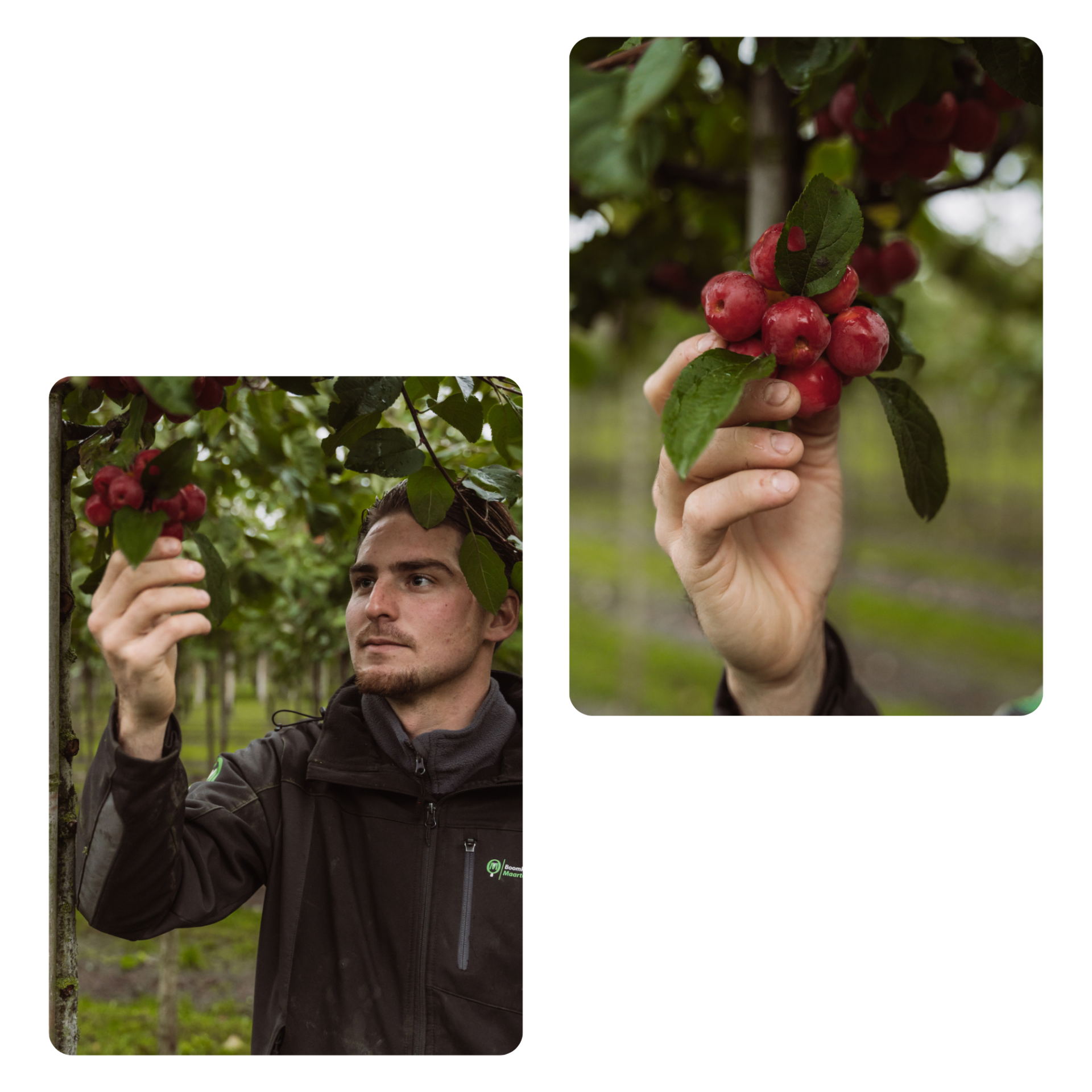
During the growing season, Mark focuses on the cultivation of the three-, four- and five-year-old trees. He decides how and when to prune, when to top the trees, and what the schedule looks like. Since this year, he has been managing the work schedule together with a colleague.
In practice, this means spending less time on the aerial platform himself and more time organising, coordinating and planning ahead.
“You sometimes feel less productive, but if eight other colleagues can work efficiently all day because you’ve prepared everything, it ultimately pays off more.”
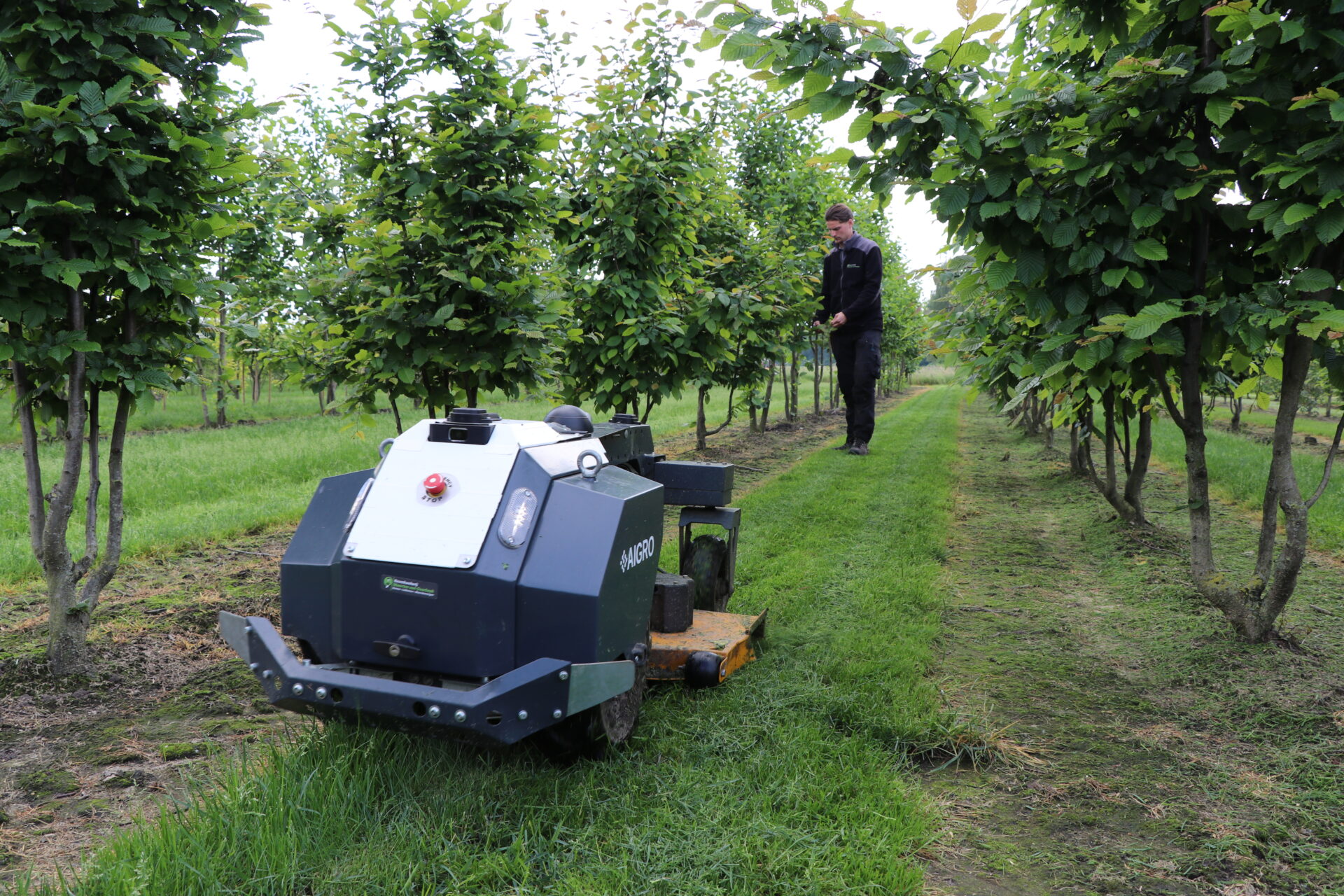
In addition to his role during the harvesting season, Mark was also given a key responsibility within the company’s robotisation programme. Mark plays a key role in the company’s robotisation programme. From the very first introduction of the AIgro robots, he was closely involved in their implementation at the nursery. The first year presented its fair share of challenges and required a fundamentally different way of working. As the first nursery to use these robots, we learnt, adapted and built up the system together.
Today, the robots are an integral part of our daily operations. Mark monitors their performance and maintains contact with the supplier to ensure that technology and practice remain optimally aligned.
Planning, organising and making sure everything runs smoothly: that’s what energises Mark. Healthy trees, a well-maintained nursery and a process that runs smoothly give him the greatest sense of fulfilment. Looking ahead, he sees himself continuing to grow in his current role, perhaps with more responsibility or a larger team. “But that has to happen organically. I believe in that more than setting a fixed end goal.”
For outsiders, it’s often hard to grasp just how much work goes into running a tree nursery. The picture is often limited to planting and digging up trees. In reality, the whole process demands constant attention, coordination and decision-making. Especially when you’re constantly raising the bar together. Mark would therefore advise anyone hesitating about entering the industry or making a career change: give it a go and experience for yourself what the work entails.